Fish Feeding in Winter: A Daily Go or No-Go Check
For fish feeding in winter, let the pond decide. When the water cools, fish eat less and digest slowly, so cut the meal size, feed at midday and stop if fish do not come up. Check four things before every meal: water temperature, how fish behave, leftover feed and morning oxygen.
Why do fish eat less in winter?

Fish are cold-blooded. Their body temperature follows the water, so appetite and digestion slow down as the pond cools. Feed that the fish cannot eat or digest ends up in the water, and rotting feed uses up oxygen.
Mississippi State University Extension, writing about recreational pond fish, advises to reduce the feeding rate to about one-fourth of the previous summer rate as winter approaches and not to feed in very cold water. That page covers bream and bass, not Punjab carp or tilapia, so treat the one-fourth figure as a guide and watch your own pond.
What is the daily go or no-go check?
Run this before each meal. It takes about five minutes.
| Check | Go (feed a small meal) | No-go (skip the meal) |
|---|---|---|
| Pond water temperature | Steady or rising after a sunny day | Falling, or after a cold night and fog |
| Fish behaviour | Fish rise and take the first pinch | Fish stay deep and ignore feed |
| Leftover feed | Nothing floating 2 to 3 hours later | Pellets still on the surface |
| Dawn oxygen | Fish calm in the morning | Fish gasping at the surface |
If any column says no-go, skip the meal and try again next day. Missing a meal in cold water costs far less than fouling the pond.
Fish feeding in winter: how much should you cut the feeding rate?
Daily feed is a percentage of the total weight of fish in the pond, not a number per fish. Our guide to working out the daily feed for a fish pond explains how to estimate total weight by netting and weighing a sample.
In winter, cut both the amount and the number of meals. A simple pattern is one small meal around midday, when the water is warmest, in place of two or three meals in summer. Keep the place and time the same each day so the fish learn where to come.
Re-weigh a sample every two to four weeks if the fish are still growing. In cold water growth is slow, so the old weight may be close to the real one, and you will not overfeed by using last month's figure.
Which feed works best: floating fish feed?
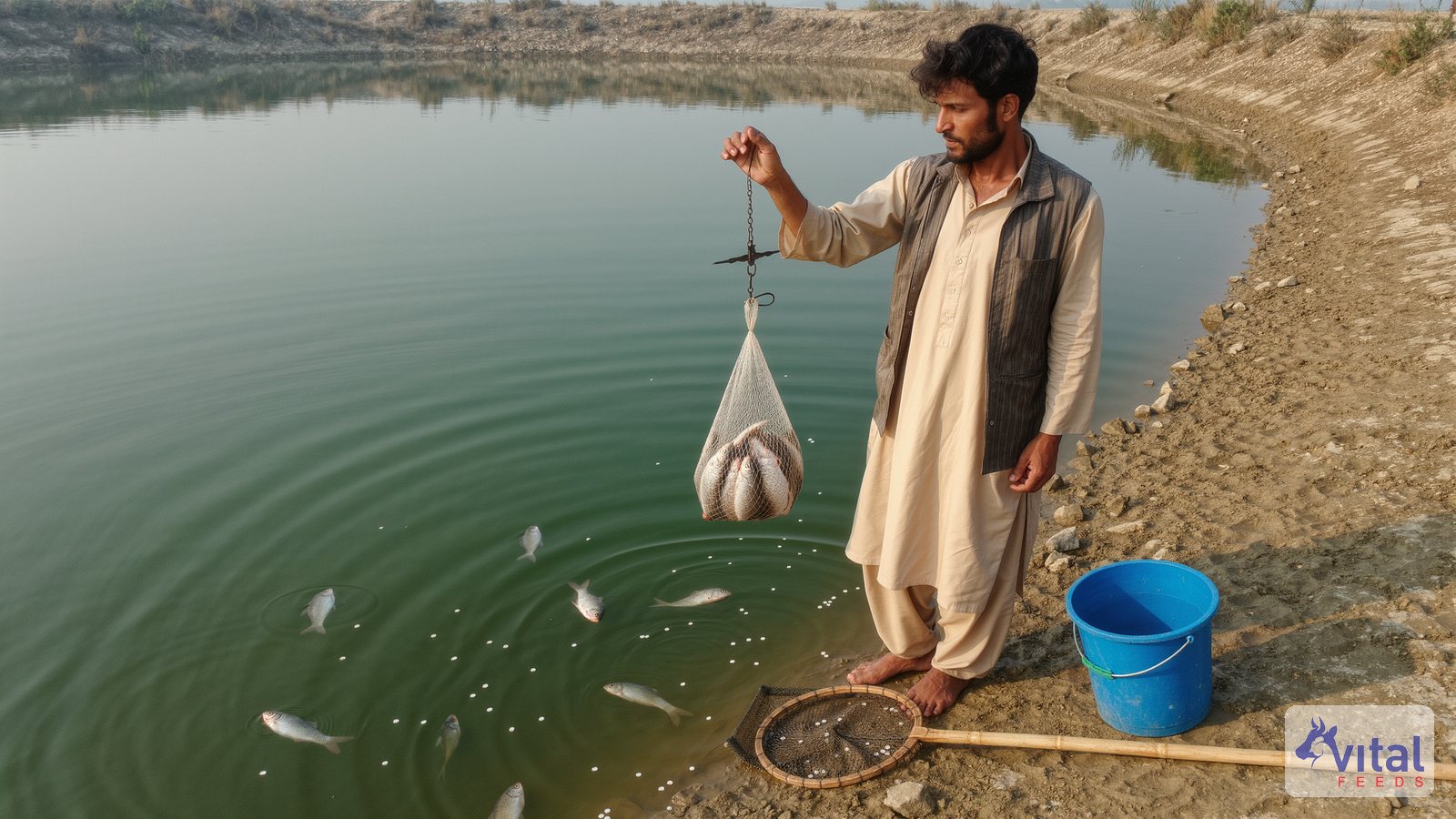
A floating fish feed lets you see what is eaten. That is the biggest winter advantage. If pellets float for hours, you know the fish are not eating and you can stop the next meal. Sinking feed hides the problem on the pond floor.
Pick a pellet small enough for the fish to take in one bite. Keep sacks off the floor and covered, as damp feed grows mould quickly. If you also keep buffaloes, our winter feeding checklist for buffaloes in December and January covers the rest of the farm.
What are the winter oxygen warning signs?
Cold water holds more oxygen, but a still pond with rotting feed, algae die-off or thick fog can run low at dawn. Signs are fish gathering at the surface, gulping air and moving slowly in the first hour of daylight. Stop all feeding that day and, if you have an aerator or can run a pump to splash water, use it. Call a local fisheries officer or aquaculture vet if fish are dying.
Warm winters differ from the cold nights of December and January, so the safe amount in November may be wrong in January. That is why the check matters more than a fixed number. For more on staying ahead of winter risks, read our post on broiler shed ventilation in winter.
FAQ
Should I stop feeding fish completely in winter?
Not always. In very cold water, stop. In mild spells, a small midday meal is usually fine if fish come up for it and nothing is left over.
What time of day is best for winter fish feeding?
Midday or early afternoon, when the water has warmed a little. Avoid feeding at dawn.
How do I know I am overfeeding?
Pellets floating after 2 to 3 hours, cloudy green water, or fish gasping at dawn are all warning signs. Cut the next meal in half.
Written by Waqas Rafiq, CEO of Vital Feeds and founder of EL TESSA


Comments
Post a Comment