Layers Laying Less in Winter? A 5 Point Shed Check
If your layers are laying less in winter, check light before feed. Shorter days switch egg production down, and a broken light schedule makes it worse. Walk the shed once at dusk and once at dawn, and check five things: light hours, bulb brightness, power cuts, feed and water. Most winter drops start there.
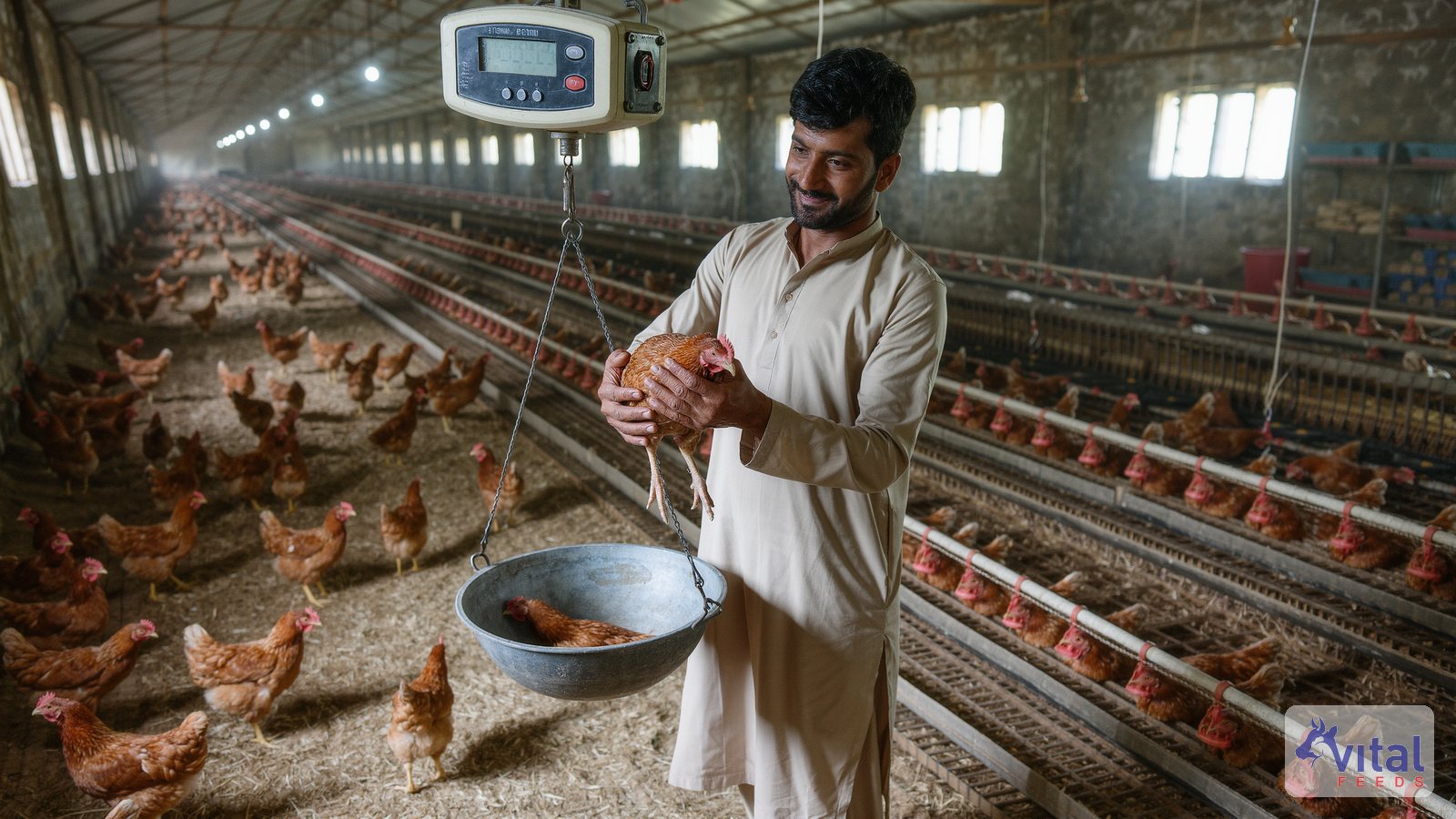
Light, feed and water checks come first when layers lay less in winter.
Why are layers laying less in winter?
Daylight is the main driver. The Food and Agriculture Organization explains that decreasing day length slows egg production in laying hens, and that supplementary lighting only works when the electricity supply is regular and reliable. It also warns that breaks in the extra light can make the drop worse.
Cold plays a smaller part. A hen that is warm enough, with full feeders and clean water, can still lay well on short days. A hen that is cold, thirsty or sitting in a dark shed will not.
That is why a layer egg production drop in winter often looks sudden on a farm that lost power for a few evenings. The flock was fine until the lighting routine broke.
What does the 5 point shed check cover?
Do this walk in about five minutes. Write the result in a notebook so you can compare week to week.
| Point | What to look at | What a problem looks like |
|---|---|---|
| 1. Light hours | Total of daylight plus bulb hours | Lights off by 5 pm, or switched by hand and forgotten |
| 2. Bulb brightness | Dust on bulbs, spacing, dark corners | Hens at the far end of the shed sit in the dim |
| 3. Power cuts | Does the timer reset after load-shedding? | Light is off in the morning on cut days |
| 4. Feed | Troughs full early morning and late evening | Empty feeders by mid-afternoon |
| 5. Water | Drinkers flowing, clean and not ice cold | Dry nipples, dirty cups, hens crowding at one drinker |
Take each point one by one.
Light hours and brightness
Add the extra light at the start or end of the day and keep the total the same every day. FAO warns that going past 17 hours of effective daylight can work against egg production, and notes that 24 hour security lighting can cause this. So more is not better. Many layer guides aim for roughly 16 hours in total, but check the guide for your own breed.
Brightness matters too. FAO reports that egg production falls when light at the level of the bird's eyes is under 5 lux. You can get a rough reading with a free lux meter app on a phone, held at bird height at the far corner of the shed. Wipe dusty bulbs, since a dirty bulb gives noticeably less light than a clean one.
Power cuts
A timer helps only if the light actually comes on. On a farm with load-shedding, a small inverter or a battery bulb on the lighting circuit protects the schedule. One missed evening is not a disaster, but regular gaps are what FAO means by interrupted supplementation.
Feed
Hens eat more when they are cold, because part of the feed goes into keeping warm. Fill the troughs fully early in the morning and again late in the evening, and watch whether feed is gone before the next filling. If feeders are empty by mid-afternoon, the hens are short of feed for part of the day. See our earlier guide on switching pullets to layer feed if the flock is only just starting to lay.
Water
Water is the point most often missed in a cold snap. Kansas State University Extension notes that hens will suffer after 10 hours without water and advises checking water twice a day. Punjab winters rarely freeze drinkers, but cold mornings can leave lines slow, dirty or blocked. Check nipples and cups at first light.
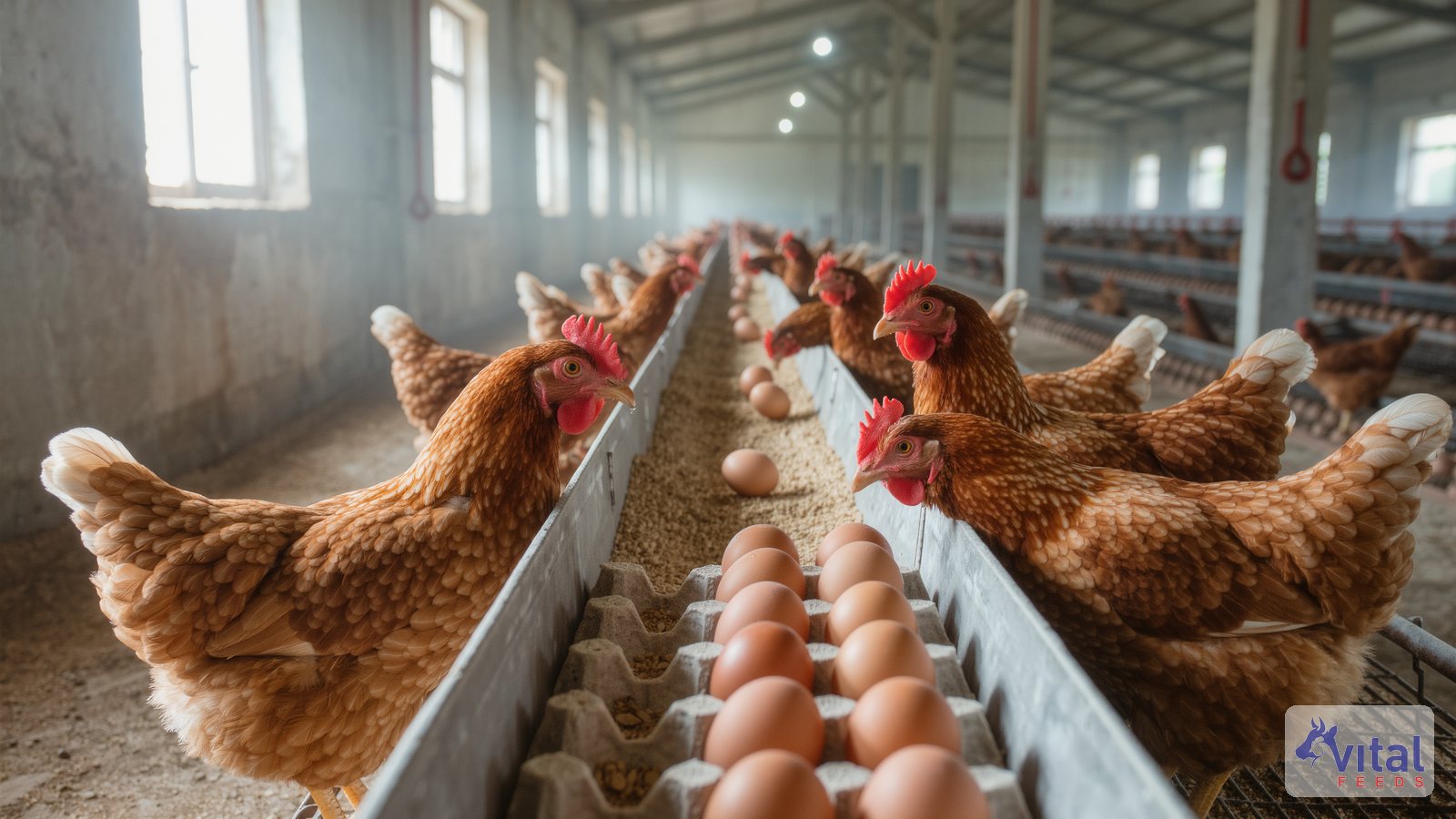
A steady light schedule protects layer egg production in winter.
Should you change the feed in winter?
Not as the first step. Ask first whether the hens can see, drink and reach feed all day. A richer feed will not fix a dark shed. If light, water and feeder checks are clean and the flock is of normal age, then talk to your feed supplier or a poultry vet about the ration.
Our knowledge page on layer egg production drop in winter lays out the same reasons with the sources in one place.
What does a simple winter week look like?
| Time | Task |
|---|---|
| First light | Check water and feeders, switch on lights if on a manual plan |
| Mid morning | Collect eggs, note the count |
| Late afternoon | Clean one or two bulbs, top up feeders |
| Dusk | Confirm lights come on, check the timer |
| Weekly | Compare egg counts and note any power cuts |
The same ventilation care that protects broilers also helps layers breathe in a closed shed. We covered that in our broiler shed ventilation in winter guide.
When should you call a vet?
Call a poultry vet if egg numbers fall sharply along with sneezing, watery droppings, a drop in feed intake, or deaths. Light, water and feed checks cannot treat disease. A sudden collapse in lay is a reason to get a diagnosis, not to wait for the weather.
FAQ
How many hours of light do layers need in winter? Many layer guides use about 16 hours in total, from daylight plus bulbs. FAO warns that going above about 17 hours can reduce production, so keep the schedule steady and do not run lights all night.
Do layers lay less when it is cold? Mostly the shorter days matter. Cold raises feed use, but hens with enough feed, water and light can keep laying.
How dim is too dim? FAO reports that egg production falls when light at the bird's eye level is below 5 lux. Measure at bird height, not at the bulb.
How often should I check water? At least twice a day, and always at first light on cold mornings.
Written by Waqas Rafiq, CEO of Vital Feeds and founder of EL TESSA


Comments
Post a Comment