Switching Pullets to Layer Feed: 6 Mistakes and a 10 Day Plan
Switching pullets to layer feed should follow body weight and the first eggs, not the calendar alone. Layer feed carries 3 to 4 percent calcium, which young birds do not need. Keep pullets on grower feed until they are close to lay, then change over in steps across about 10 days.
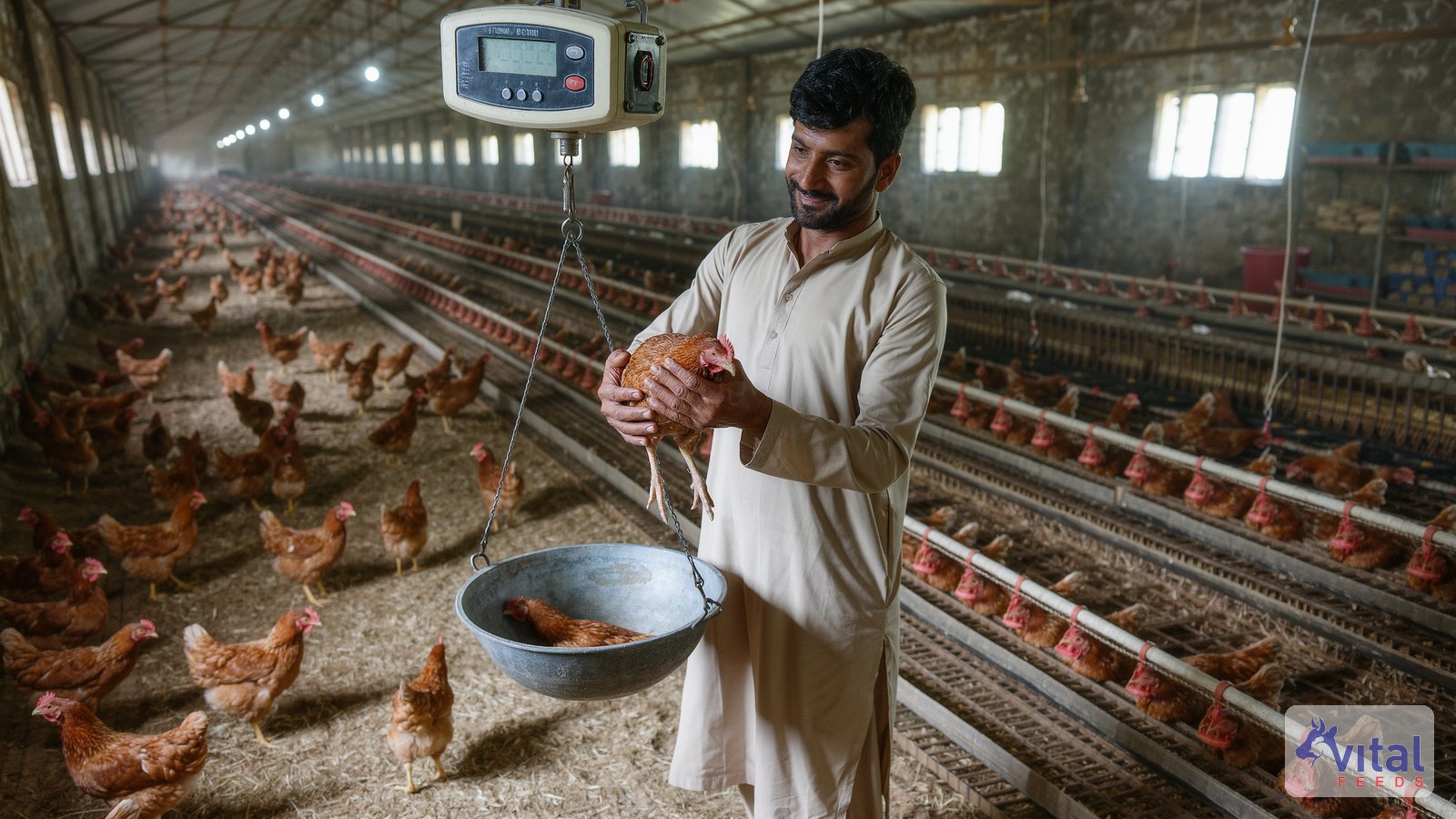
Weigh before you change feed, not after.
Why is switching pullets to layer feed early a risk?
The University of Georgia Extension poultry team is direct about this. A layer diet should contain 3 to 4 percent calcium and should only be fed to birds that are laying. They add that feeding it to a young, developing pullet can result in bone problems, and they treat pullets of about 1 to 18 weeks as birds that need a pullet feed.
The reason is simple. A growing pullet is building bone and body frame. A laying hen is building egg shells every day. The two jobs need different amounts of calcium, and the wrong feed at the wrong age costs you either bone strength or shell quality.
When is the right time to switch?
Look at three signs together rather than one.
| Sign | What to check |
|---|---|
| Body weight | Weigh about 100 birds each week and compare with your breeder's target for that week |
| Age | Close to point of lay for your breed, not earlier than your breeder's guide allows |
| Birds | Combs reddening, birds restless at nest boxes, the first eggs appearing |
If weight is behind target, keep feeding grower feed a little longer. Uneven flocks lay unevenly, and rushing them does not fix that. Check your breeder's management guide first, because breeds differ.
What are the 6 most common mistakes?
- Switching on the calendar only. Two sheds of the same age can be a week apart in body weight.
- Changing in one day. A sudden change can make birds eat less for a few days.
- Using layer feed for the whole flock when only some are laying. Late birds still need grower feed.
- Mixing in roosters or young stock. Males and young birds should not eat layer feed.
- Ignoring feeder space and water. Birds that cannot reach feed will not eat the new ration.
- Skipping the weigh-in before the change. Without a number, you are guessing.
What does a simple 10 day changeover look like?
This is a practical plan, not a laboratory rule. Many farms blend the new feed in steps so the birds accept it. Adjust it to your flock and your breeder's advice.
| Days | Grower feed | Layer or pre-lay feed |
|---|---|---|
| 1 to 3 | 75% | 25% |
| 4 to 6 | 50% | 50% |
| 7 to 9 | 25% | 75% |
| 10 onward | 0% | 100% |
Weigh the flock again at day 1 and day 10. Watch feed left in the feeders each morning. If birds stop eating, hold the blend for an extra day before you move on.
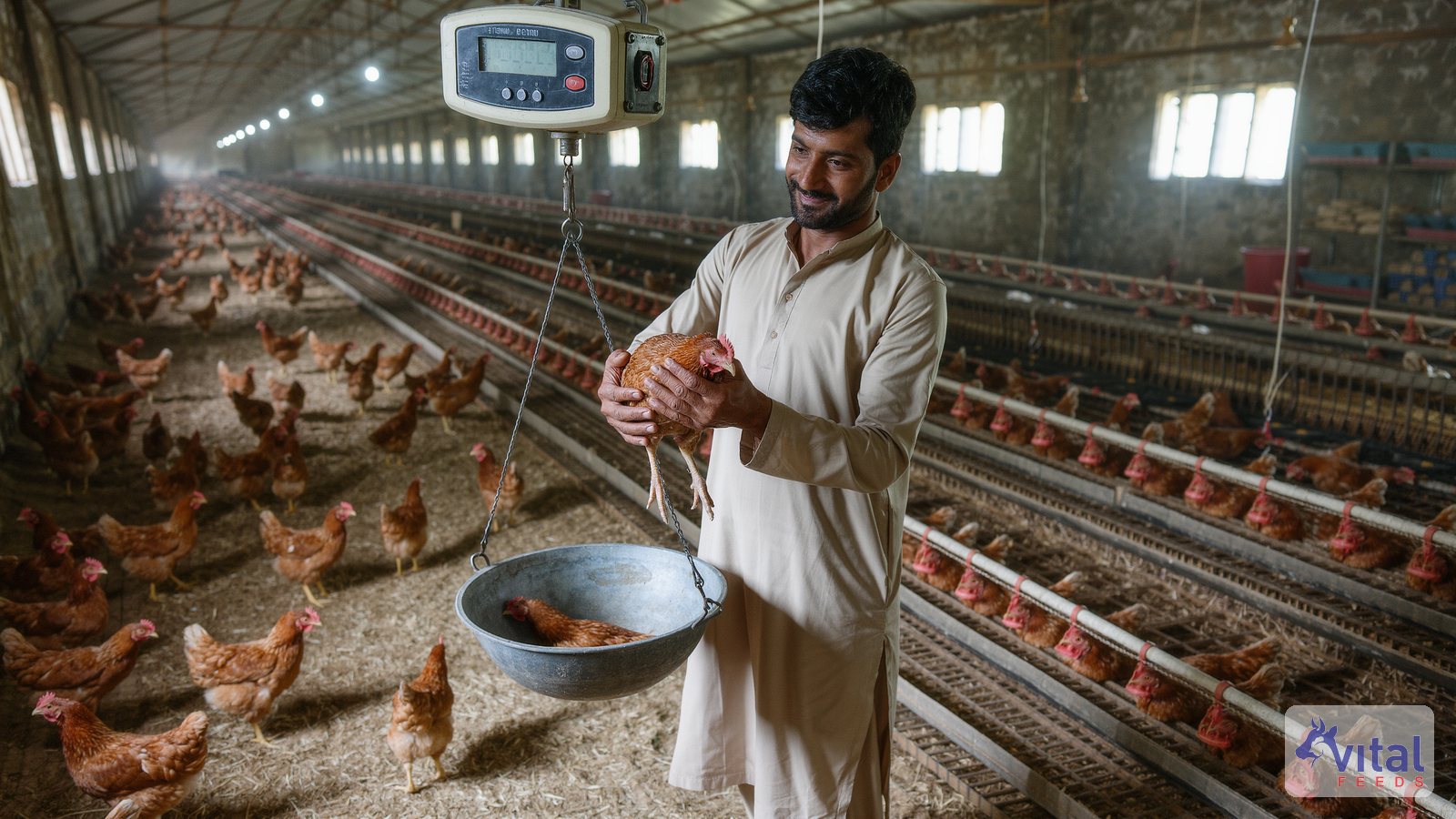
A weekly sample of about 100 birds gives a fair picture.
What is a pre-lay feed?
A pre-lay feed sits between grower and layer feed. It is used for a short time before the first eggs and carries a bit more calcium than grower feed. It is not meant to be fed for long. Follow your breeder's guide for the weeks and the amounts. Our guide to the layer feeding schedule by stage sets out the stages from chick starter to the layer ration, with body weight targets and calcium timing.
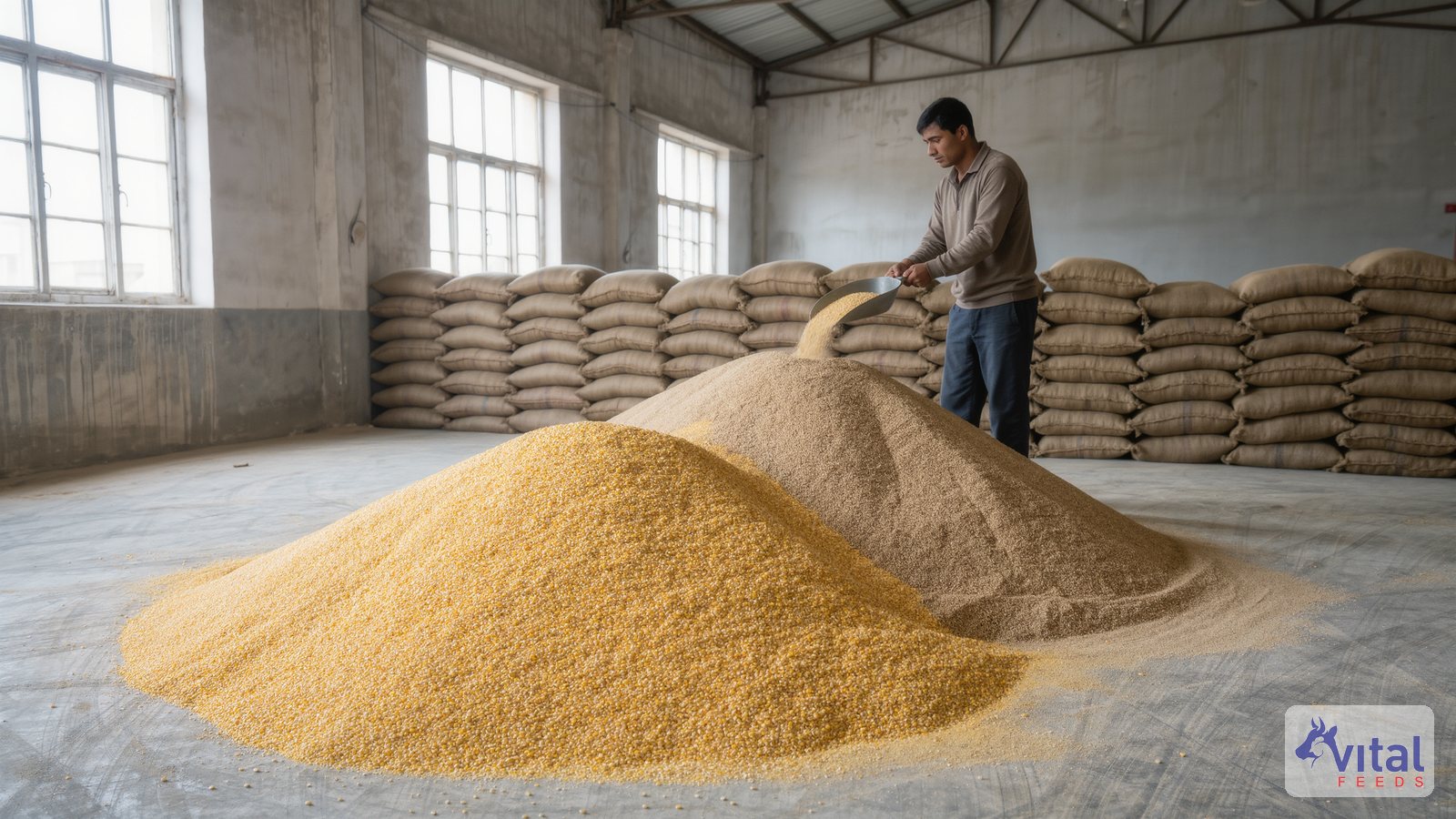
Layer feed is built on maize and soybean meal, with calcium added for shells.
What about summer in Pakistan?
Hens eat less when sheds are hot, so a feed change in June is harder than one in November. Do the changeover in the cooler part of the day, keep water cool and clean, and do not start it in a heat wave. If you are moving pullets into a new shed at the same time, give them a few days to settle first. Stress and a new feed together is a lot to ask.
A short checklist before you start
- ☐ Birds weighed and compared with the breeder target
- ☐ Males and late birds separated or kept on grower feed
- ☐ Feeder space and water points checked
- ☐ New feed ready, fresh and dry
- ☐ A weigh-in booked for day 10
Dry storage matters too. I covered how damp and mould build up in my guide on aflatoxin in poultry feed, and the same care applies to a new bag of layer feed.
Quick FAQ
Can I give layer feed to young pullets to make them lay sooner? No. It does not bring eggs sooner, and the UGA team warns it can cause bone problems.
Do hens need extra calcium on top of layer feed? A complete layer feed is balanced. Ask your vet or nutritionist before adding anything on your own.
How do I know the changeover worked? Birds eat well, weight stays on target, and egg numbers and shell quality build steadily.
Written by Waqas Rafiq, CEO of Vital Feeds and founder of EL TESSA


Comments
Post a Comment