Broiler Shed Ventilation in Winter: Do Not Close It Up
Broiler shed ventilation in winter should never stop completely. A closed, warm shed traps moisture and ammonia, and the litter turns wet. Keep a small, steady flow of fresh air high above the birds, check the shed at night, and keep humidity between 55 and 65 percent.
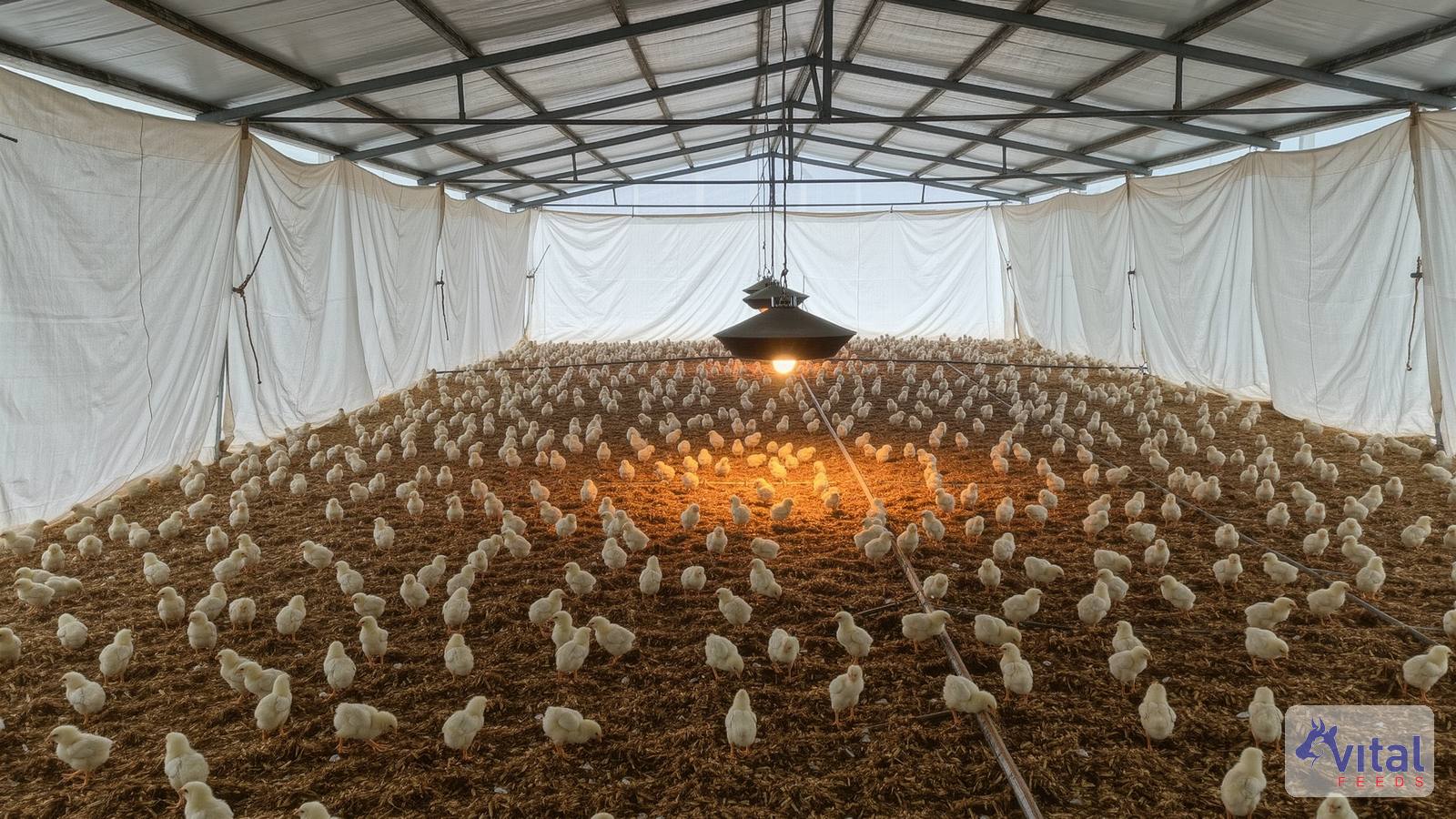
Dry litter and gentle fresh air matter more than a sealed, warm shed.
Why does broiler shed ventilation in winter matter, even in a warm shed?
Many farmers close every curtain in the first cold nights. The shed feels warm, so it feels safe. But birds breathe out water all day, and the litter adds more. In a sealed shed that water has nowhere to go.
Wet litter then releases ammonia. Ammonia burns the eyes and airways, and the birds eat less and grow slower. A shed that feels cosy to you can be hard on the flock. The aim is not a hot shed. The aim is clean, dry, steady air.
What is minimum ventilation in plain words?
Minimum ventilation means bringing in just enough fresh air to push out extra moisture and ammonia in cold weather. Mississippi State University Extension, quoting Aviagen guidance, says it works on a timer, not on temperature. In a curtain shed the same idea means a small opening at the top of the sidewall, so cold air enters high and mixes before it reaches the chicks.
Two simple rules follow from that:
- Open at the top, not the bottom. Air at bird level feels like wind to young chicks.
- Open a little all the time rather than a lot now and then.
What numbers should you watch?
The same Mississippi State publication gives practical targets for the house air.
| Measure | Target | What goes wrong |
|---|---|---|
| Ammonia | 20 to 25 ppm or less | Slower growth, red eyes, coughing |
| Humidity inside the shed | 55 to 65 percent | 50 percent or less is dusty, 70 percent or more cakes the litter |
| Litter | Dry and crumbly | Wet patches under drinkers and at the walls |
Most small farms in Punjab do not own an ammonia meter. Your nose is a rough guide: if you can smell ammonia clearly when you step in, the air is already poor. The Aviagen Ross guide says people can smell ammonia at about 20 ppm, so a clear smell is the time to act. A cheap hygrometer for humidity is a good first buy.
Should you close up when it is cold and damp outside?
This is the most common mistake. Cold, foggy air feels wet, so farmers shut the shed to keep the damp out. The extension publication explains why this is usually wrong. Fans or open vents remove more moisture from the shed than the outside air brings in, so the net effect is a drier shed. Cold air also holds little water, and it warms up inside, which lets it pick up even more moisture from the litter.
So on a foggy morning, do not seal up. Keep the small top opening and look at the litter instead.
Why does the night check matter most?
Ammonia is rarely a problem in a mild afternoon, when the shed is airy. It builds at night, when temperatures fall and openings are closed. The publication advises paying special attention at your last check at night and your first check in the morning.
Here is a simple routine for a cool-season night:
- Last visit before sleeping: step inside, breathe in, and look at the birds. Are they spread out, or piled in corners?
- Check for a strong smell, for damp spots under drinkers and for condensation on the roof.
- If the air feels heavy, widen the top opening a little. Do not open the sides.
- First visit in the morning: check the same things again before the day warms up.
- Write down what you saw. Two lines in a notebook is enough.
The Mississippi State authors also warn about the opposite error. Too much air brings draughts, dusty litter and higher heating cost. The target is steady, not maximum.
How does air quality connect to feed and growth?
A chick that is cold spends feed energy on staying warm, which raises feed per kilo of meat. A chick breathing ammonia eats less and grows slower. Both hurt the same number at the end of the flock: feed conversion.
That is why a good feed alone cannot rescue a poorly aired shed. The feed has to be eaten and digested by healthy birds. Check the feed before you blame the bag, and check the shed air before you blame the feed. Our aflatoxin in poultry feed guide covers the first half of that question, and the layer feed changeover plan shows how we think about slow, steady changes.

Warm the chicks with the brooder, and keep the air fresh above them.
Quick winter checklist
- Keep a small opening at the top of the sidewall at all times.
- Hold humidity at 55 to 65 percent.
- Fix leaking drinkers the same day.
- Add dry litter on wet patches and turn the cake near walls.
- Visit at night and again at first light.
- Do not shut the shed because it is foggy outside.
FAQ
Is it better to keep the shed hot and closed? No. A warm, closed shed gets wet litter and ammonia. Keep the air moving gently high above the birds.
How do I know the ammonia is too high without a meter? If you smell it clearly at the door or the birds cough and have watery eyes, it is too high. Increase the top opening and check the litter.
Does this apply to chicks in their first week? Chicks still need a warm brooding zone. Use the brooder for warmth, and keep the small top opening for fresh air.
For temperature targets, litter depth and heater safety in the cool season, read the Vital Feeds guide on keeping broilers warm in winter. Vital Feeds is a feed manufacturer in Arifwala, Punjab.
Source: Mississippi State University Extension, Spring and Fall Broiler Production Presents Challenges.
Written by Waqas Rafiq, CEO of Vital Feeds and founder of EL TESSA


Comments
Post a Comment