Broiler Water Consumption in Winter: A 5 Minute Morning Check
Broiler water consumption in winter drops quietly, and feed intake follows it. A healthy flock drinks about 1.6 to 1.8 kg of water for every 1 kg of feed at 21 degrees C. If the shed is cold, the lines are stale or the drinkers are too high, birds drink less, eat less and grow slower. Check water first, every morning.
Why does broiler water consumption change in winter?
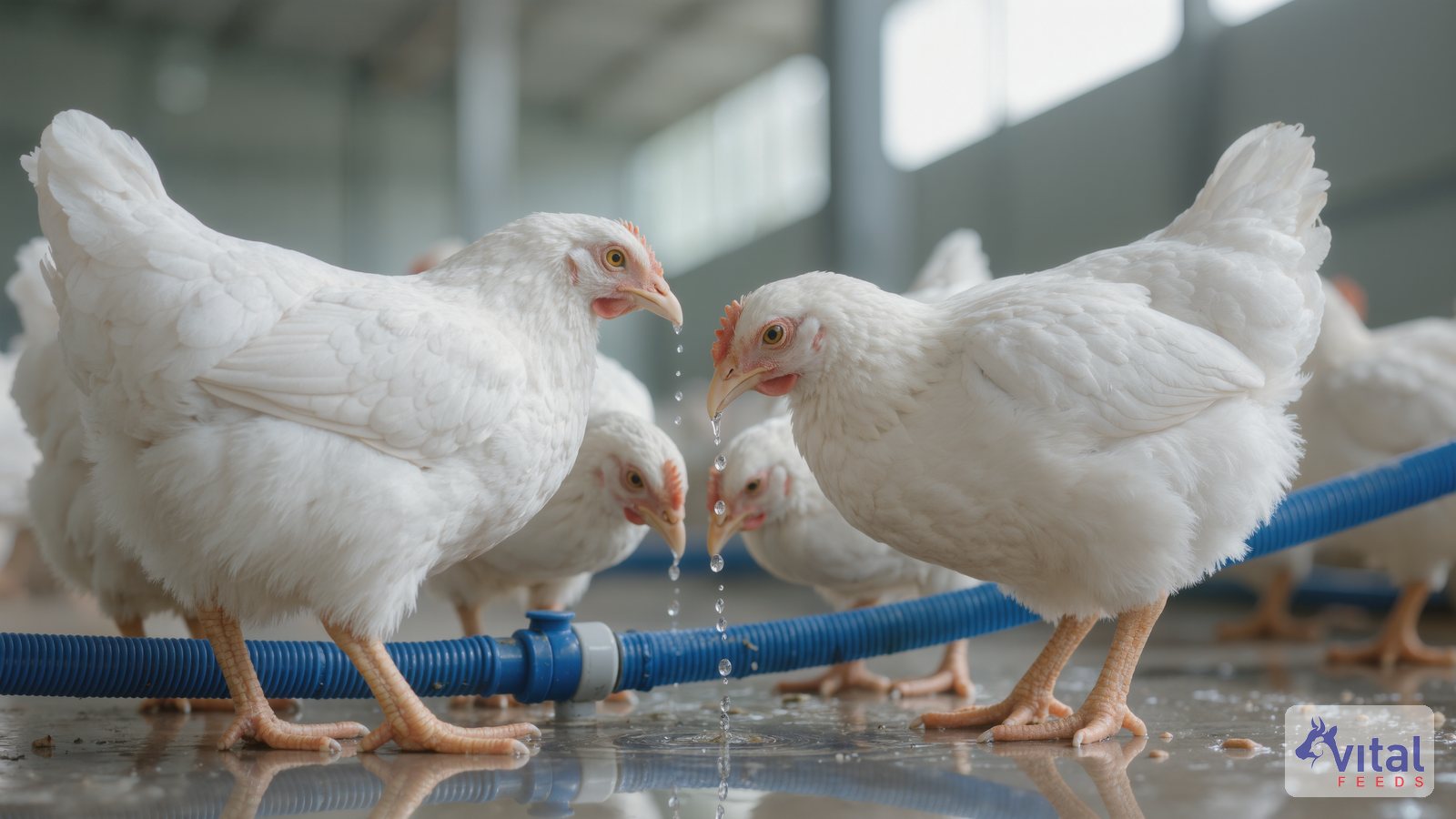
Check the drinker line and water every morning in winter.
Because cold shifts how birds behave. Chicks crowd under the brooder, walk less to the drinker and sip less. Water that sits in pipes overnight turns very cold, and pipes that run through a heated shed can turn warm. Both hurt intake. Aviagen says water use and the water to feed ratio should be measured daily, because a change from the flock's normal is the earliest warning you will get.
Many farmers watch the feeder and forget the drinker. In winter this is a costly habit, since a bird that drinks less cannot digest and use feed well.
How much water should a broiler drink per day?
Use this table as a mild-weather guide. Feed figures follow the Ross 308 line, and water is feed multiplied by 1.6 to 1.8. Your own meter reading matters more than any chart.
| Day | Feed per bird (g) | Water per bird (ml) | Water per 1,000 birds (litres) |
|---|---|---|---|
| 7 | 35 | 55 to 65 | 55 to 65 |
| 21 | 105 | 170 to 190 | 170 to 190 |
| 35 | 180 | 290 to 325 | 290 to 325 |
If water use sits clearly below this line for two mornings while feed use also falls, look at the shed before you look at the feed. Our full table is on the broiler water consumption per day page.
What is the 5 minute morning check?
Do these five things before the first feeding round:
- Read the water meter or measure the tank level, and divide by bird count and feed used. Write the ratio down.
- Touch the water at the far end of the line. Very cold or warm water is a problem. A common target is 18 to 21 degrees C.
- Look at drinker height. Zootecnica International says to raise lines gradually so birds drink with a straight back and a slightly extended neck.
- Press a few nipples. Blocked or leaking ones show up here first.
- Flush the line if water has stood overnight, and watch the drinkers for wet litter beneath them.
What should drinkers and lines look like?
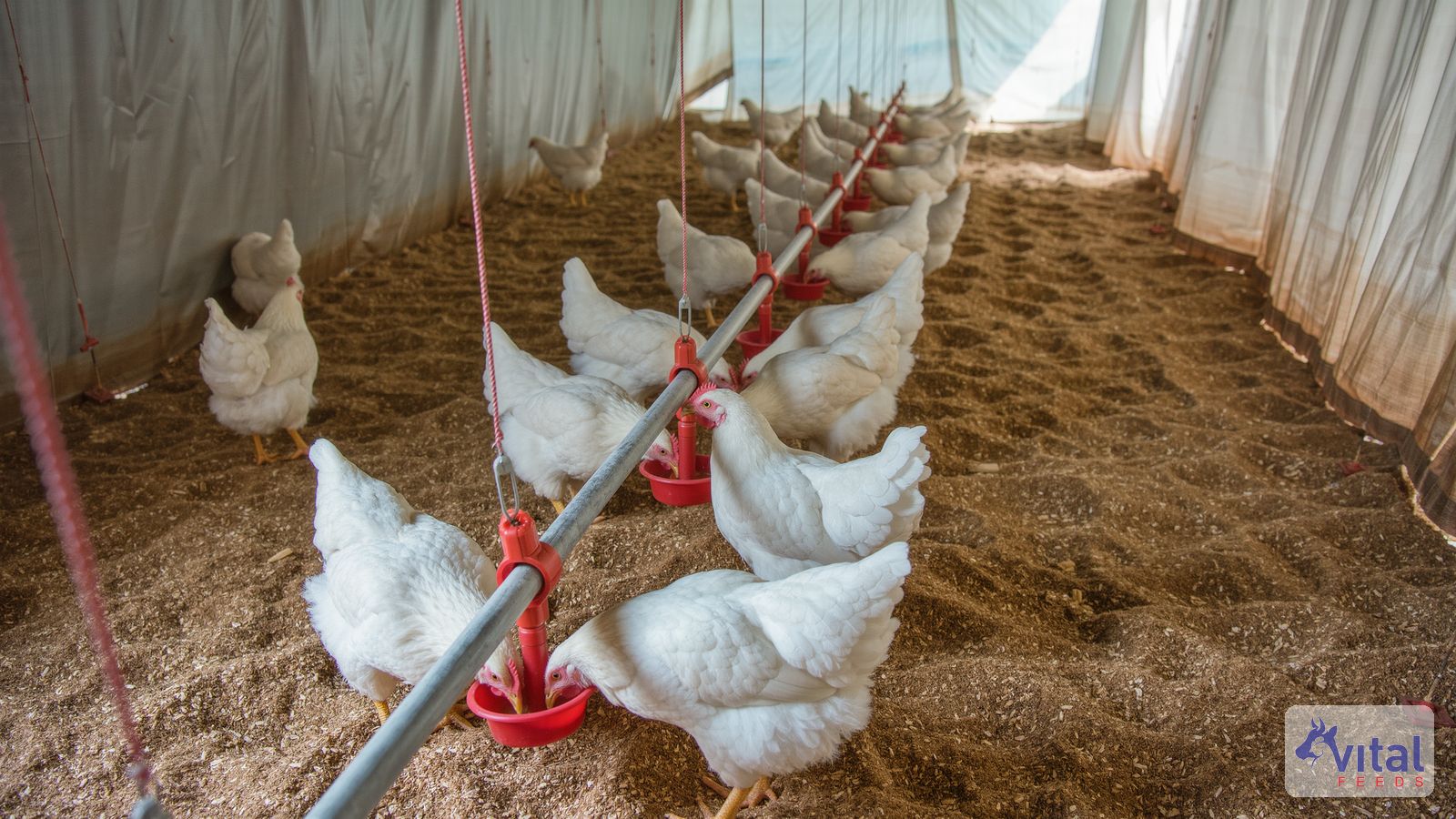
A nipple drinker line set at bird height.
| Check | Good sign | Problem sign |
|---|---|---|
| Drinker height | Level with the bird's back | Birds stretch or crouch |
| Nipples | Drop forms and drips on touch | Dry, stuck or constantly dripping |
| Litter below drinkers | Dry and crumbly | Wet, caked patches |
| Water at line end | Cool and clear | Warm, cloudy or slimy |
| Birds per nipple | Not crowded | Many birds waiting |
Biofilm, a slime that grows inside pipes, can also block medicine and vaccine doses given in water. Flushing lines between flocks and when water stands is a simple prevention.
How do cold sheds and heaters change the water picture?
Our guide on broiler shed ventilation in winter shows how too little fresh air costs more than a cold shed. The same shed logic applies to water. Heaters dry the air, and birds need slightly more water in dry warm air; very cold sheds cut movement and sipping. Aim for a steady shed, not a hot patch beside the brooder.
Layer farms see the same pattern in cold weeks, where layers laying less in winter often trace back to water and light before feed.
What does a sudden drop mean?
A drop of water intake by itself is not a diagnosis. It can be a blocked line, a pressure fault, cold water, a drinker set too high, or the start of disease. Fix the simple causes first, same day. If birds look dull, the droppings change or mortality rises, call a poultry veterinarian. Do not guess a medicine from a chart.
What does Vital Feeds do about feed quality in winter?
Vital Feeds is a feed manufacturer in Arifwala, Punjab, and our advice is simple: even a good broiler feed cannot be eaten if the bird will not drink. Keep water steady first, then judge feed. The sources and method for the table above are listed on the page linked earlier.
FAQ
How much water do 1,000 broilers drink at 21 days?
About 170 to 190 litres a day in mild weather, from the table above. Use your own meter to confirm.
Should I warm the drinking water in winter?
Very cold water can reduce intake, but heating is not needed in most sheds. Keep tanks out of the cold wind, flush stale water, and aim for cool, not icy, water.
Do I need to flush water lines every day?
Flush when water has stood for hours, such as the morning after a cold night, and between flocks. Ask your poultry adviser for a schedule that fits your system.
Written by Waqas Rafiq, CEO of Vital Feeds and founder of EL TESSA


Comments
Post a Comment